


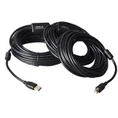


Since most current Apple and Intel jointly developed the Lightning Technologies (Thunderbolt), to provide even higher than most USB 3.0 transfer rates. Making use of Mac and PC USB standard interface has more extensive market opportunities and on the basis of 3.0! usb interface connector family becomes even more powerful. Guoguang Group --usb connector manufacturer or overall induction introduced usb classification:
1, USB interface, four types:
- Type A: generally used for PC
- Type B: generally used for USB devices
- Mini-USB: generally used in digital cameras, digital cameras, measuring instruments and portable hard disk, etc.
- Birth USB Type-C is not long, in August 2014 release of USB 3.1 standard has just finalized. It is a new USB cable and connector specifications, including the definition of connectors, ports, container and cables, etc., a whole new set of USB physical Regulation。
2, usb interface socket connector free application!
①USB A type Male

② Common Interface 5Pin Mini B type:

This interface due to the outstanding performance of the anti-error interpolation, the volume is relatively small, so more and more manufacturers are gaining favor, this interface is now widespread in the card reader, MP3, digital cameras and portable hard disk.
Mini B type 4Pin Common Interface:
③ Mini B type 4Pin

This interface is common in the following brands of digital products: Olympus C-Series and E Series, most of Kodak digital cameras, Samsung MP3 products (such as Yepp), SONY series of DSC, Compaq IPAQ series ... ...
④MINI B type 8Pin

Mini B type 8Pin Round

⑥ Mini B type 8Pin 2 × 4

3. usb interface socket connector specification three versions?

The first edition USB only 1.5Mbps, and then upgrade to USB 1.1, the transmission rate is only 12Mbps,
Later evolution to the USB 2.0 specification, the transmission rate up to 480Mbps, is currently the standard most of the equipment used.
USB 3.0 standard is Intel, Microsoft and several industry leading companies promote them together, because it has up to 5Gbps transfer rate of USB2.0 link current increased from 500mAh to 900mAh, charging speed using USB3.0 interface more fast and other advantages, and by more companies to join. Now, USB has reached the highest standard USB 3.1 specification, its highest reading transfer rate of up to 10Gbps.