

 Italiano
 Việt Nam
 Português
 русский
  عربي
عربي  Deutsch
 한국어
한국어 Türkçe
 日本語
日本語 Español
 Français
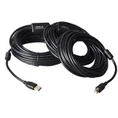


USB 2.0 Cable
USB 2.0 Cable
Is the Universal Serial Bus (USB) standard. Almost all USB-capable devices and all USB cables support at least USB 2.0 (often called High-Speed USB). Devices that adhere to this USB standard are capable of transferring data at speeds up to 480 Mbps.

USB 2.0 cables are made with solid, silver-plated, oxygen-free copper conductors. When using cables of this caliber, it is critical to implement a solid core design that completely eliminates the negative effects of strand interaction and skin effect. Each solid conductor is then wrapped using STC's proprietary dual-monofilament technology and then encapsulated in extruded FEP, which reduces the cable's capacitance, thereby increasing signal speed and bandwidth.
USB 2.0 cables arrange their conductors in a precise double-helix geometry to ensure characteristic impedance, minimize crosstalk, and reduce noise. To further reduce noise and protect the USB signal path from any external interference, the STC features a double-layer silver foil jacket and silver braid shield. Finally, the USB cable is cut to mechanically tuned lengths before being terminated with gold-plated fully shielded connectors, thereby reducing internal microphonic effects and high-frequency impedance resonances.
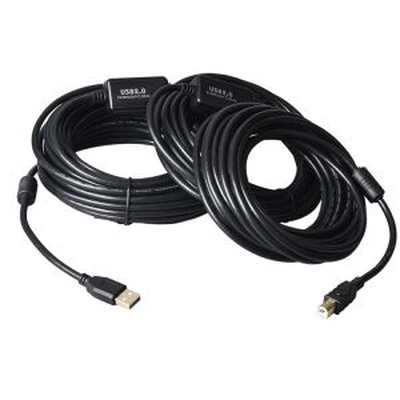
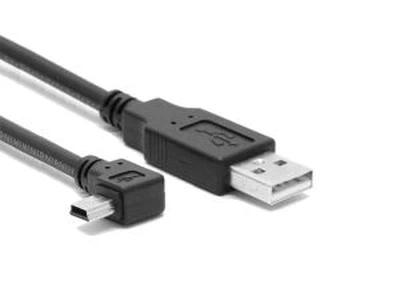

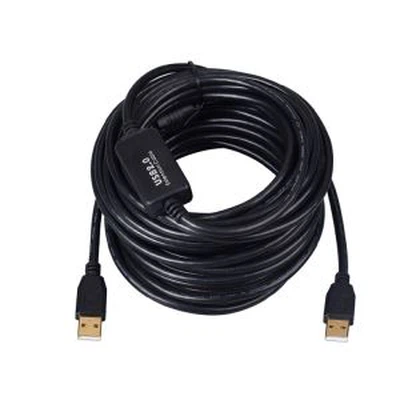


Advantages Of USB 2.0 Cable
Digital image transmission provides lossless signal transmission and therefore provides better images than analog image transmission.
Skip expensive frame grabber cards. Since 2003, all PCs have offered multiple integrated USB ports.
Extremely cheap standardized cable and connector technology with integrated voltage source for the camera. They are much cheaper than analog Hirose cables, but are usually not lockable.

Features Of USB 2.0 Cable
USB 2.0 Cable provides a bandwidth of 480 Mbit/s, which is equivalent to an effective image data rate of 40 MB/s. This performance is sufficient for operating multiple cameras of standard resolution or higher on a single computer and inspecting multiple parts per second.
This technology provides hot plug/hot plug: devices can be connected and detected during operation. Provides integrated power supply (5 VDC) to the device in the 4-pole cable. USB-compliant devices may draw a total of 500 mA from the bus. Therefore, devices with power up to 2.5 W can be powered via the bus.
According to specifications, the maximum length of the USB cable shall not be 4.5 m. By using high-quality cables, lengths of approximately 10 m are also possible. If longer distances have to be bridged, hubs can be connected in between.
The 4-pole USB cable is designed with simplicity, featuring two power supply and two twisted data conductors (D+ / D-). Symmetrical data transmission utilizes one wire for the signal and the other for the inverted signal, enabling the receiver to double the signal level and effectively cancel widespread interference. This design makes USB cables virtually interference-free, with a thin cross-section that facilitates easy installation in industrial settings.
Bidirectional data transmission is possible: camera control, triggering, and parameter settings can also be performed during operation.
The bus specification involves a central host controller that coordinates the connected peripheral devices (called slaves). In theory up to 127 different devices can be connected to the USB bus: this is done in a star topology. Since only one USB device can be connected to a USB outlet, a splitter (hub) must be used. The network structure can be up to six layers deep. Does not allow daisy chaining like FireWire.
However, practical experience with USB camera systems in industrial facilities has shown that operating multiple cameras that capture and send images simultaneously can cause issues such as interference and overall cable length. Specific bandwidth on the bus can indeed be allocated and used exclusively. USB camera guaranteed. However, this feature no longer works with any other connected devices.
For a true multi-camera system, ideally only one camera is connected to one USB bus. Additional USB cards are cheap and easy to retrofit.

STC Electronic Co., LTD
STC was founded in 2008 in Guangdong, China, and we take pride in the assistance and support we offer to our clients. Our nationwide dealer network consists of secondary dealers, value-added resellers (VARS), system integrators, IT consultants, and retail outlets, among other channels.
STC is a producer of OEM-facing custom molded cable assemblies. We possess the internal know-how and resources necessary to offer clients in international markets comprehensive design, engineering, and manufacturing services tailored to their specific requirements. To guarantee that we can provide our clients with the greatest selection of products and services, we establish enduring connections with each of our suppliers.
Specialized custom cable assemblies for a range of industries, such as military and aerospace, camera connection cables, printer cables, high-frequency high-speed cables, and medical, and robotic components, are among the industries in which we specialize in producing custom cable assemblies.

OEM ODM Service
As a usb cable factory, we offer complete custom usb cable options including branding, logo printing, color variations, and customized packaging. Enhance your brand's market presence with our tailor-made solutions that help you create a unique image and increase brand recognition. Work with us to enhance your brand influence.

Excellent Service
Whether you have a product question or need assistance, our dedicated sales and support teams are committed to providing prompt responses within 24 hours. We value our partnerships and strive to support you with USB 2.0 cable samples, products and advice in the best possible way. We will become your trustworthy partner and provide you with timely and comprehensive support.

Quality Control System
In order to provide high-quality products to global customers, we have established a reliable quality control system. We have a young product development team and conduct strict inspections at every stage of production to ensure strict compliance with quality standards. We are committed to maintaining excellent quality from the earliest stages to the final product. We are committed to strict quality control measures that enable us to consistently provide high-quality micro usb cable products.

Fast Delivery
Our factories operate at a stable capacity, ensuring optimal performance and efficiency. This enables us to maintain a large inventory of USB cables, thereby shortening the lead time for our valued customers. Rest assured, our commitment to operational excellence allows us to serve your needs effectively and efficiently.

USB 2.0 Connector
USB Type A
Technically known as USB 2.0 Standard-A, these connectors are the perfectly rectangular USB connectors found on most non-mobile devices. USB 2.0 Type A connectors are physically compatible with USB 3.0 and USB 1.1 connectors.
USB Type B
Technically known as USB 2.0 Standard B, these connectors are square in shape with a small notch at the top. USB 2.0 Type B plugs are physically compatible with USB 3.0 and USB 1.1 Type B receptacles, but USB 3.0 Type B plugs are not backwards compatible with USB 2.0 Type B receptacles.
USB Micro-A cable
These connectors, especially the plug, look like a tiny version of the USB 2.0 Type A connector. The USB 2.0 Micro-A plug is compatible with USB 2.0 Micro-AB receptacles and USB 3.0 Micro-AB receptacles. However, the newer USB 3.0 Micro-A plug does not fit into the USB 2.0 Micro-AB socket.
USB Micro-B
These connectors are small and rectangular, but the corners on one side are angled rather than square. The USB 2.0 Micro-B plug is compatible with four types of sockets: USB 2.0 and USB 3.0 Micro-B and Micro-AB sockets. Newer USB 3.0 Micro-B plugs are not backwards compatible with USB 2.0 Micro sockets.
Mini Usb 2.0 Cable
These connectors are small, mostly rectangular, with one side very rounded. USB 2.0 Mini-A plugs are only compatible with USB 2.0 Mini-AB receptacles.
USB Mini-B
These connectors are small, mostly rectangular, with noticeable indentations on the short sides. The USB 2.0 Mini-B plug is compatible with USB 2.0 Mini-B and USB 2.0 Mini-AB receptacles.
FAQ Of USB 2.0 Cable
Q: Is USB 2.0 the same as USB C?
Q: Is USB 2.0 the same as USB C?
Q: How can you tell the difference between USB 2.0 and 3.0?
Q: Does USB 2.0 need a special cable?
Q: Can I plug a USB 2.0 into a 3.0 port?
Q: Is USB 2.0 fast enough for 4k?
Q: Is USB 2.0 the same as USB B?
Q: Can USB 2.0 be used for power?
Q: What happens if you plug a USB 2.0 into a USB 3.1 port?
Q: Why is my USB 2.0 not working in my USB 3.0 port?
Q: What is the maximum distance between USB 2.0 cables?
Q: Is there a difference between USB 1.0 and 2.0 cables?
Shenzhen STC Cable Manufacturer is one of the leading China usb 2.0 cable manufacturers and suppliers, welcome to buy and wholesale high-quality usb 2.0 cable from our factory.