


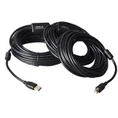


About USB3.1 is now the focus of discussion, USB3.1 is the latest USB specification, which was initiated by Intel and other large companies. Faster data transfer speeds up to 10Gbps. Compared with USB 3.0 technology, the new USB technology uses a more efficient data encoding system, and provides more than twice the effective data throughput. It is fully backward compatible with existing USB connectors and cables. , USB3.1 and relevant products have gradually into the people's attention, in particular, where the traditional host-side devices that provide expansion interface board is most active. While the next generation of Intel 100 series chipset still does not provide native support USB3.1, USB3.0 but like before, like before yet native programs are based on the integration of third-party control chip to provide a new interface .
USB3.1 and USB3.0 mention improved compared to what
USB3.1 standard released in July 2013, the maximum theoretical bandwidth when compared to USB3.0 doubled to 10Gb / s (Super Speed +). USB3.1 USB3.0 from the previous encoding the 8b / 10b replaced 128b / 132b, bandwidth consumption rate dropped from 20% to around 3% in terms of bandwidth, the same after more than 1.2GB / s, it also means limit the use of real USB3.1 transfer rate is expected to be close to 1GB / s. USB3.1 what can much faster than USB3.0

USB3.1 what can much faster than USB3.0
Although the upgrade as in the past, like, USB3.1 also brings a higher transmission rate, and fix the various aspects of pre-existing, but more people are talking about with the introduction of new Type- C USB3.1 interface. Similar to Apple's Lightning Interface, Type-C interface to cancel the former foolproof protection design, it can be both positive and negative, regardless of the use of proper insertion, eliminating the need to identify the direction of insertion trouble.
Another big selling point USB3.1 Type-C is a mobile device charging capability enhancement. Powered USB 3.1 interface for maximum allowable standards greatly improved to 20V / 5A (only Type-A / B), can provide up to 100W of power output capacity. The highest standard Type-C is 12V / 3A, 36W charging capacity is sufficient to use some of the thin and light notebook, which is also dare to give up the New MacBook MagSafe and the use of Type-C as the charging interface of the important reasons.
Functional USB 3.1 Type-C also introduces a new Alternate Mode (alternating mode), which means that Type-C interface and data lines can be transmitted non-USB data signals. Currently Alt Mode has been able to support DisplayPort 1.3 and MHL 3.2 specification, USB-IF at the same time is also seeking support for other standard features, in addition to video interface, also can be Type-C and other support such as Ethernet interfaces.
USB3.1 and USB3.0 transmission speed comparison
Although currently still no native USB3.1 support, but compared to the native USB3.0, USB3.1 solutions to third highest access speed up or native USB 3.0 can reach more than 60%, the overall performance is not so us down.
In the end how fast USB USB3.1 for your Secret Society
Appears USB3.1 Type-C interface for mobile devices will play a very important role, for now, USB3.1 the Type-C is most likely to become a future connection standards provide data transmission, peripherals , integrated display output and other connectivity solutions. It is reported that in 2017 the EU will force all mobile devices unified USB3.1 interface. USB3.1 In addition to PCs, mobile phones, tablet next year will be full speed in popularity, while the technology also has been Intel, Google, Microsoft and Apple support. USB .1 and Type-C interfaces, after all, a big trend, motherboard manufacturers start now to layout USB 3.1, expected by the host side products led other USB 3.1 external devices to enter the market, promoting the popularization of considerable significance to USB 3.1's.