



Administrators often need to face the option of choosing to use an updated, more exciting technology or choose to use existing technology that has proven to be stable. For our server hardware devices, these two options are specific to whether to use a new SATA hard drive or an existing SCSI drive.
Price factors and some new features make serial ATA, that is what we call SATA technology is very attractive. But it seems to me that the use of SCSI technology is still a good standard for the server, I will tell you the reasons in this article.
SATA technology is an upgraded version of the existing ATA / IDE drive standard, which has been used for many years as a standard for desktop hard drives and removable storage devices such as CD / DVD drives. Compared to SCSI drives, ATA drives always have a low price and ease of use, just behind performance in SCSI drives. While SATA technology has been to narrow the performance gap as the goal, and provides a lot of compelling features, it can be said, SATA technology in performance has taken a big step.
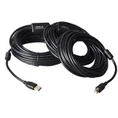
SATA cables STC technology advantages
SATA is cheaper than SCSI. Whether it is the drive or the hardware itself (such as controllers and data lines), are much cheaper than SCSI. If you have to consider the budget needed to build a server, then this is a very attractive point. In most cases, building a redundant array of SATA-based inexpensive disks is much less expensive than building a SCSI array of the same capacity. For example, a 36-GB, 10,000-rpm enterprise-class SCSI drive costs $ 175, and the same cost can be purchased with a capacity of 200 GB, 7,200 RPM SATA drives per minute.
SATA provides almost the speed comparable to SCSI. Under ideal conditions, SATA-based redundant array of inexpensive disks can reach 90 percent to 95 percent faster than SCSI-based arrays. And a single SATA drive is almost able to achieve this standard.
From a physical point of view, SATA management easier. SATA drives use data and power connections that are lighter and easier to manage than those used by SCSI drives. SATA data cable required length is generally not more than one meter, this will not cause signal transmission problems, and thinner data lines can also bring more air to the equipment space.
Use the benefits of SCSI drives
Said the advantages of so many SATA technology, we look at its shortcomings, it is these shortcomings led to the limitations of this technology application.
SATA drives have not yet reached the level of enterprise-class SCSI drives. The high power consumption that an enterprise's SCSI drives can afford is that SATA drives can not afford. There are still some gaps in SATA drives and enterprise-class SCSI drives, such as data splitting, mechanical errors, and disk errors. In general, SATA drives are considered a desktop-level drive, and manufacturers can not guarantee that these drives will work for more than two or three years at high usage levels.
SATA command level is not enterprise-class. SCSI uses a technique called "command queue" to optimize the storage of data, which allows the controller to execute requests related to data within the drive according to the best command. For a server, at the same time there will be a lot of different users to make a request, if the disk drive does not have such a similar layer can handle a lot of concurrent demand technology, then the disk drive will become a bottleneck in system performance, resulting in System performance degradation. And SATA drives do nothing better in this area than SCSI drives.
SATA technology relies on CPUs to manage data transfers while SCSI drives are not. SATA technology to ATA / IDE technology on the CPU's dependency completely inherited down, it uses the CPU to manage the data transmission, this will increase the CPU occupancy rate. The SCSI controller can rely on the controller's own hardware devices to manage data transmission, which means that SCSI drives can have faster and greater data throughput. Although SATA technology to the system to bring additional CPU occupancy rate and the traditional ATA / IDE drive compared to much smaller, but these CPU occupancy and bus bandwidth can be used to do other things, then why not What?
SATA drives require a dedicated power connection device. In many cases, this is a small but important factor that should be taken into account when calculating the budget. SATA drives do not work properly without a traditional drive power connection device. While a dedicated SATA power connection device requires a system power supply cost and the cost of using a power converter is almost $ 10 per drive.
In short, the most suitable for using SATA technology is those simple, single-hard disk servers and desktop computers, or some need to provide high-speed disk performance of the workstation (such as multimedia editing station). Although the price of SATA is very attractive, but we'd better not use it in the enterprise-class server. Spend some money on the SCSI device, the rest of the things become simple. SATA drives will be a compelling alternative to low-level SCSI applications (such as desktop computers that use SCSI drives), which should gradually replace the presence of ATA / IDE devices and get a wide range of applications in this area.

Analysis of SCSI and SATA Selection
Mar 11, 2017Leave a message
Previous
What is the OTG date cables?Next
VGA CableSend Inquiry